What Adjusters Hope You Don’t Know Before Signing Anything

What Adjusters Hope You Don’t Know Before Signing Anything

There’s a moment I’ve seen play out too many times. Someone gets rear-ended on a Tuesday afternoon, walks away feeling shaken but okay, exchanges insurance info, and drives home. By Thursday morning, an adjuster has already called twice. By Friday, there’s a settlement offer sitting in their email — and a release of liability attached to it.

They sign it. They just want it over.

Three weeks later, the neck pain they brushed off becomes a diagnosis. The car repair estimate didn’t cover the frame damage. And the form they signed? It closed every door.

I spent years on the claims side reviewing files, watching how quickly a case could be shaped by the first 72 hours after a crash. Now I work alongside personal injury attorneys, and I hear the same story from the other direction — from the people who signed first and called us second. This article exists because I want you to be the person who calls first.

The First Hours: Where Most Claims Are Won or Lost

The scene itself matters more than people realize. Not just for police — for everything that comes after.

After a crash, your instinct might be to move vehicles, calm down, and exchange information quickly. That’s understandable. But those first minutes are also your best window to document what actually happened, before anything gets moved, cleaned up, or reframed.

What to capture before you leave the scene:

  • Photos of both vehicles from multiple angles
  • Road conditions, skid marks, and traffic signals
  • Any visible injuries — yours and any passengers’
  • The other driver’s insurance card, license, and plate number
  • Witness names and contact information
  • Word-for-word notes of anything the other driver said (“I didn’t see you,” “I was looking at my phone”)

Then call the police. Always. Even for what looks like a minor fender bender.

A police report isn’t just paperwork. It’s an objective, timestamped account created before anyone had a chance to revise their story. It records the other driver’s information, any citations issued, witness names, and the officer’s observations about fault. If you’re working with accident lawyers boston down the road, that report becomes one of the first documents they’ll request — and its absence creates a gap that’s genuinely hard to fill.

If police don’t respond to the scene, gather witness contact information yourself. Ask bystanders what they saw. These details become your substitute record when there’s no official one.

The Documentation Window You Can’t Afford to Miss

People feel fine at the scene, skip the ER, and don’t see a doctor for five or six days. By then, the insurance adjuster has already noted “no immediate medical treatment” in the file. That notation will follow the claim everywhere.

Delayed symptom data from the CDC confirms what emergency physicians already know — concussion and traumatic brain injury symptoms can take up to 48 hours to surface. Whiplash, soft tissue injuries, and internal bruising often don’t announce themselves until the adrenaline clears.

Waiting to “see how you feel” isn’t cautious. It’s a gap an adjuster can exploit.

Go get evaluated. Same day if possible, next day at the latest. Not because you’re certain you’re hurt, but because the medical record you create today is the only one that will be dated before the insurance company starts building its version of your story.

Build your paper trail from day one:

DocumentWhy It Matters
ER visit summaryEstablishes injury timeline before insurer’s narrative forms
Follow-up appointment notesShows ongoing treatment, not a one-time visit
Prescription receiptsQuantifies medical costs with dated proof
Physical therapy referralsDocuments severity and treatment scope
Timestamped injury photosCaptures bruising that develops over days
Personal symptom logCreates a contemporaneous record in your own words

Federal safety guidance from NHTSA reinforces this: delayed reporting of symptoms gives insurers a direct argument that your injuries weren’t caused by the crash. The medical record you build in the first week is your counter to that argument.

What the Insurance Adjuster Is Actually Doing When They Call

Let me be direct about something, because I’ve been on that side of the call.

When an adjuster contacts you within 24 to 48 hours of a crash, they are not calling to help you.

They are calling to gather information while you are still in shock, still managing logistics, possibly sleep-deprived, and before you’ve had a chance to understand what your claim might actually be worth. They may ask for a recorded statement, framing it as routine — just a quick call to get your account of what happened. What they’re actually doing is locking you into a version of events before you’ve seen your full medical picture, before you know the extent of the damage, and before you’ve had any legal guidance.

You are not required to give a recorded statement to the other driver’s insurance company. Full stop.

You can say, “I’m not prepared to give a recorded statement at this time,” and that is a complete answer.

They may also ask you to sign a broad medical authorization. Consumer guidance from the NAIC is clear on this: adjusters are trained to request releases that can give insurers access to your full medical history — not just records related to the crash. That means they can search for preexisting conditions, unrelated treatments, anything that might let them argue your injuries predated the accident.

What you should do instead: notify your own insurance company promptly (your policy typically requires this), but keep the conversation factual and brief. Report that the accident occurred, where, and when. You don’t need to speculate about fault, describe your injuries in detail, or accept any offer on that first call.

The Release of Liability: The Document That Closes Everything

This is the one that keeps me up at night, professionally speaking.

A release of liability is not a formality. It is a legal document that, once signed, typically ends your ability to pursue any further compensation — ever — for injuries or damages connected to that accident. Symptoms worsen? Repair estimate missed structural damage? Doesn’t matter. Once you’ve signed, that chapter is closed.

Early settlement offers are almost always low. The adjuster knows you don’t yet have a complete medical picture. A quick offer — even one that sounds reasonable — is often a fraction of what a fully documented claim would yield.

The only time a quick settlement makes sense: your injuries are genuinely minor, fully resolved, your doctor has cleared you, and you understand there is nothing more coming. Not “I feel okay right now and I want this done.”

If you’re uncertain — about your injuries, about the offer, about what you’re signing — that uncertainty is your signal to pause. Talk to a personal injury attorney before you sign anything. Most offer free consultations. The conversation costs you nothing. Signing the wrong document could cost you everything you’d otherwise be owed.

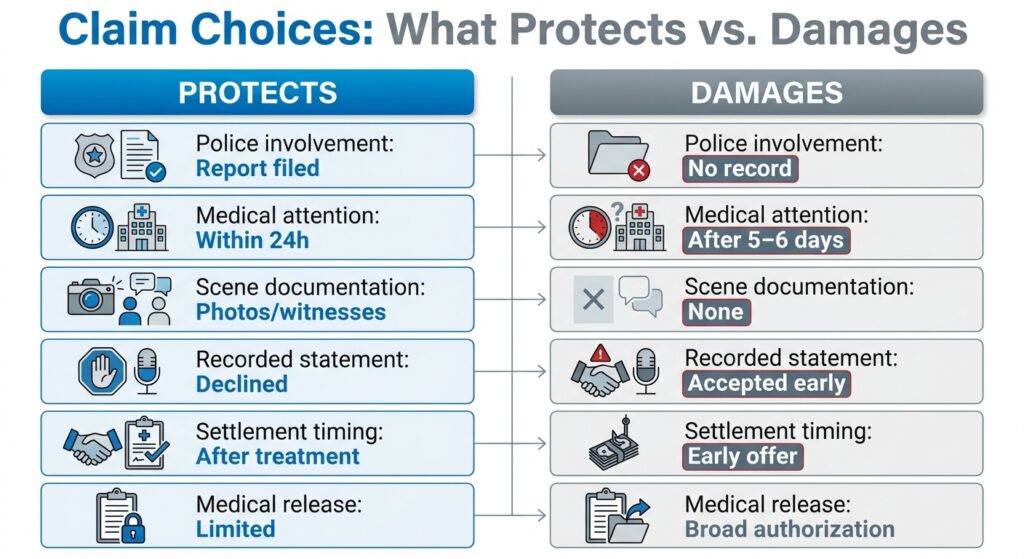
Claim Decisions: What Protects You vs. What Damages You

The difference between a strong claim and a damaged one usually comes down to a handful of decisions made in the first week. Here’s how those choices actually play out:

DecisionProtects Your ClaimDamages Your Claim
Police involvementCall police, obtain report numberSkip the call, no official record
Medical attentionEvaluated within 24 hoursWait 5–6 days, “no immediate treatment” noted
Scene documentationPhotos, witness contacts, written notesLeave without documenting
Recorded statementDecline until you have guidanceGive statement while still in shock
Medical releaseSign only specific, limited authorizationSign broad release covering full history
Settlement timingWait until treatment is completeAccept early offer before full picture emerges

The pattern isn’t complicated. It’s just hard to see when you’re exhausted, in pain, and someone official-sounding is telling you this is all routine.

The Objections I Hear — And What I Say Back

“The adjuster seemed really nice and said this was standard.”

I’m sure they were pleasant. Adjusters are trained to be. Friendly and fair are different things, and pleasantness doesn’t change what a document does once you sign it.

“I don’t want to seem difficult or like I’m trying to sue everyone.”

Asking questions before signing a legal document isn’t difficult — it’s responsible. You wouldn’t sign a lease without reading it. This is no different, and the stakes are higher.

“I don’t think I need a lawyer for something this small.”

That’s a fair instinct, and honestly, not every accident requires litigation. But a consultation isn’t a commitment to sue. It’s information. A personal injury attorney can tell you whether your claim is straightforward or whether there are complications you haven’t spotted yet. That’s worth an hour of your time before you close the door permanently.

“It’s been two weeks. I probably waited too long already.”

You likely haven’t. Massachusetts has a three-year statute of limitations for personal injury claims. Two weeks is not too late — but it is a good time to stop waiting and start getting organized.

Before You Sign Anything: A Simple Sequence

If you’re in the middle of this right now, here’s what matters most — in order.

Step 1: Start medical documentation today. Not tomorrow. The timestamp on that first visit is one of the most important pieces of evidence your claim will have.

Step 2: Decline a recorded statement. Tell the other driver’s insurer you’re not prepared to give one at this time. No further explanation required.

Step 3: Read before you sign anything. No release, no medical authorization, no settlement agreement — not until you understand exactly what it covers and what it closes.

Step 4: Preserve everything. Photos, the police report number, witness contacts, every medical receipt, every symptom you notice. Keep it in one place.

Step 5: Get a consultation if you’re unsure. Even if you never hire an attorney, knowing what these documents actually do puts you back in control of your own claim.

That feeling of uncertainty when you’re staring at paperwork? It’s information. It’s your instinct telling you to slow down before something becomes permanent.

You don’t have to figure this out alone. You don’t have to decide anything tonight. But the decisions you make in the first week — about documentation, about statements, about what you sign — are the ones that will define what’s still possible later.

How Can You Prove Hospital Negligence For A Lawsuit?

Understanding The Legal Standard In Hospital Negligence Cases

Hospital negligence lawsuits hinge on proving that a medical facility’s actions or omissions fell below an accepted standard of care. This standard is defined by what a reasonably prudent medical professional would do in similar circumstances. A successful case requires showing that the hospital breached its duty, resulting in injury or harm. Familiarizing yourself with these legal standards is the first step in building a credible claim.

Gathering Medical Records And Documentation Of Care

Documentation plays a crucial role in establishing negligence. Plaintiffs must collect thorough medical records, including admission notes, treatment plans, progress charts, and discharge summaries. These papers help reconstruct the timeline of care and reveal if protocols were broken or essential steps were overlooked. Hospitals are required by law to keep accurate and complete records, which can serve as key evidence in hospital negligence lawsuits.

Identifying The Action Or Omission That Caused Harm

Hospital negligence can involve various scenarios, such as medication errors, surgical mistakes, misdiagnosis, inadequate staffing, or improper sanitation. Demonstrating what specifically caused the injury is vital. This often involves pinpointing the moment when the hospital failed its duty, whether through a nurse’s lapse, faulty equipment, or a doctor’s miscommunication. Clear causation between the error and the harm is essential for your lawsuit.

Utilizing Expert Testimonies For Standard Of Care Assessment

Most hospital negligence cases require expert witnesses to explain what should have been done differently. Medical professionals in similar fields review patient records and testify whether the hospital’s staff deviated from the standard care. These experts draw on their training and experience to identify oversights and highlight best practices, providing courts with authoritative insights that strengthen the plaintiff’s case.

Proving The Injury Was Directly Linked To Negligence

A fundamental element of hospital negligence lawsuits is causality—the direct connection between negligent actions and the patient’s injury. This means showing that the harm would not have occurred if proper procedures had been followed. Recovery can be sought for physical injuries, emotional distress, medical expenses, and in some cases, long-term disability. Documenting the full extent of damages supports your claim for compensation.

Navigating Statute Of Limitations And Reporting Deadlines

Medical malpractice claims, including those against hospitals, must be filed within strict timeframes known as statutes of limitations. These deadlines vary by state but often range from one to three years after the event or the discovery of injury. Missing these deadlines can forfeit your rights to pursue action, so promptly consulting a lawyer is crucial to protect your case.

Why Professional Legal Guidance Is Essential

Proving hospital negligence requires meticulous documentation, specialized medical knowledge, and strict adherence to legal procedures. Working with experienced attorneys can dramatically improve your chances of success, offering invaluable support in assembling evidence, securing expert testimony, and representing your interests in court.

The Types Of Birth Injuries That Trigger Lawsuits

Recognizing When Birth Injuries May Lead To Legal Action

Birth injuries are tragic events that often leave families searching for answers—and sometimes legal recourse. These injuries can occur due to medical negligence or errors during labor and delivery, affecting the child’s health and development. Understanding which birth injuries are most likely to trigger lawsuits helps parents know when to seek a professional evaluation of their child’s medical care and consider their options.

Cerebral Palsy Resulting From Delivery Complications

One of the most common birth injuries associated with medical malpractice claims is cerebral palsy. This condition can develop if a baby’s brain is deprived of oxygen during birth, often because of delayed or improper medical intervention. Symptoms may include problems with movement, muscle tone, and posture. Lawsuits may arise if medical staff failed to monitor distress signals or respond promptly to complications.

Brachial Plexus Injuries From Difficult Deliveries

Brachial plexus injuries, such as Erb’s palsy, often result from excessive force or improper handling during delivery—especially when the baby’s shoulder becomes stuck. These injuries can cause weakness or paralysis in the arm. If healthcare providers use excessive traction with delivery tools or fail to recognize risk factors in advance, their actions may be considered negligent and result in legal liability for birth injuries.

Broken Bones And Fractures During Labor

Fractures, particularly of the collarbone or clavicle, can occur if too much physical force is applied or if doctors mishandle delivery tools, such as forceps. Most broken bones heal, but they are distressing for families and sometimes a sign of substandard medical care. Parents may initiate lawsuits if they believe the fracture was preventable through more attentive or skilled medical conduct.

Brain Injuries Due To Reduced Oxygen Supply

Various brain injuries can be triggered by hypoxia or asphyxia during birth, causing long-term developmental issues and disabilities. These injuries may result from a delay in performing a necessary C-section or improper management of fetal distress. Legal cases often arise when families can demonstrate that a doctor’s inaction or misjudgment directly caused or worsened their child’s birth injuries.

Spinal Cord Damage And Permanent Disabilities

Spinal cord injuries caused by excessive pulling, twisting, or the misuse of instruments during delivery can result in lifelong paralysis or loss of sensation. While rare, these injuries are often catastrophic and certainly grounds for legal action when negligence is apparent. Lawsuits seek compensation for lifelong medical needs, rehabilitation, and adaptive equipment.

Why Legal Advice Is Crucial For Birth Injury Cases

Navigating the complexity of birth injury cases requires legal expertise. Parents should consult professionals who specialize in medical malpractice when they suspect preventable errors led to birth injuries. Skilled attorneys can help secure crucial evidence, clarify rights, and pursue compensation to support a child’s long-term well-being.

NY Medical Malpractice Lawyer Fees: What To Expect

Understanding How Medical Malpractice Lawyers Charge Fees

If you’re considering pursuing a medical malpractice lawsuit in New York, you’ll want to know how lawyers structure their fees. Unlike typical hourly billing, an NY medical malpractice lawyer usually works on a contingency basis. This means the attorney only gets paid if you recover compensation from your case. This arrangement helps injured patients access legal representation without worrying about upfront costs, making justice more attainable for those harmed by medical errors.

Contingency Fees and The Sliding Scale System

In New York, most medical malpractice attorneys charge a contingency fee—often a percentage of the total recovery awarded. However, state law sets a specific sliding scale for such cases. For example, a lawyer might earn 30% of the first $250,000 of recovery, with the percentage decreasing for higher amounts. This statutory structure prevents excessive legal fees, ensuring clients retain a fair portion of any settlement or verdict achieved.

What Happens If There Is No Recovery?

A significant benefit for clients is that if your lawyer doesn’t win or settle your case, you owe them no attorney’s fees under the contingency system. However, you may be responsible for reimbursing other case costs, such as court filing fees, expert witness expenses, or medical record retrieval fees. These costs are typically explained up front in the retainer agreement, so clients know what financial obligations they’re taking on.

Additional Expenses Associated With Your Lawsuit

Medical malpractice cases often require extensive investigation, expert testimony, and complex legal filings, which can be costly. While attorneys usually pay these expenses initially, they’re deducted from your recovery if you win the case. An NY medical malpractice lawyer will provide a breakdown of anticipated costs as your case progresses. This transparency allows clients to make informed decisions about pursuing legal action.

New York Regulations Protecting Consumers From High Fees

New York’s regulations governing lawyer fees in medical malpractice cases are designed to protect injured patients from exorbitant costs. The sliding scale limits prevent lawyers from taking too much of a client’s compensation, ensuring they are paid fairly but not excessively. These laws make legal representation more accessible while maintaining high standards of professionalism in the field.

Tips For Navigating Fee Agreements With Confidence

Before hiring an attorney, be sure to discuss fee arrangements, contingency rates, and how expenses are handled. Ask for a written retainer agreement outlining all financial terms. Thoroughly understanding the structure of attorney fees will help you enter the process with confidence, knowing what to expect and how your interests are protected.

Final Thoughts On Medical Malpractice Legal Costs

Navigating a medical malpractice lawsuit in New York can seem daunting, but knowing what fees to expect makes the journey clearer. A reputable NY medical malpractice lawyer will be transparent about costs and help you pursue justice—as you focus on healing and recovery.

Yes, Queens Has Excellent Medical Malpractice Lawyers

Medical Malpractice Cases Require Special Expertise

Medical malpractice litigation is a highly complex area of law, demanding detailed knowledge of both medical procedures and legal statutes. When facing such cases, having the support of a qualified professional is crucial. A skilled Queens medical malpractice lawyer is adept at reviewing medical records, consulting with health care experts, and building strong arguments to demonstrate negligence or error, all while navigating the rigorous requirements of the New York legal system.

Proven Track Record In Hospitals And Courtrooms

Queens is home to many attorneys with proven expertise in representing clients harmed in hospitals, clinics, and private practices. These lawyers understand the nuances of local medical institutions and have experience negotiating with their legal counsel. Whether settling claims or litigating in court, a Queens medical malpractice lawyer strives to secure fair compensation for victims—including payments for medical bills, lost wages, pain, and suffering.

Personalized Attention And Local Knowledge Matter

One major advantage of choosing a local expert is access to personalized service and intimate knowledge of the community. Queens-based attorneys can tailor legal strategies according to the specifics of your case and local judicial attitudes. Their understanding of local judges, juries, and court procedures can make a significant difference in the outcome. Accessible offices and responsive communication channels further ensure clients feel supported at every stage.

Navigating The Complex Medical Malpractice Laws

New York State has specific laws and procedures governing medical malpractice claims, including strict statutes of limitations and requirements for expert testimony. For victims, it can be overwhelming to decipher these rules alone. Experienced Queens medical malpractice attorneys guide clients through every step—from gathering evidence to filing complaints—making a daunting process manageable and improving the chances of a successful resolution.

Comprehensive Support Beyond Legal Representation

Exceptional legal professionals in Queens provide more than just courtroom advocacy. They also help clients access second medical opinions, understand the healing process, and find emotional support resources. This holistic approach can be invaluable during what is often a stressful and disruptive period, ensuring that all aspects of recovery, not just legal needs, are considered.

Making The Right Choice For Your Future

Selecting an excellent medical malpractice lawyer in Queens is about more than legal credentials—it’s about finding someone who combines expert knowledge, compassion, and a dedication to justice. When victims partner with the right professional, they gain more than just representation; they gain a powerful advocate committed to helping them rebuild their lives after experiencing medical harm.

Medical Malpractice Attorneys In Brooklyn vs. Manhattan: Any Differences?

Exploring The Landscape Of Medical Malpractice Representation

When searching for legal assistance after experiencing medical negligence, the borough in which you seek counsel may impact your case. Both Brooklyn and Manhattan offer experienced attorneys, but notable differences in their practice environments and client approaches exist. Deciding between a medical malpractice attorney in Brooklyn and one in Manhattan often depends on what matters most to clients: accessibility, familiarity, or the prestige of a firm.

Diverse Professional Backgrounds And Local Expertise

Lawyers in Brooklyn often have deep ties to local hospitals and community medical centers, providing unique insight into the borough’s health care landscape. They may be more familiar with common procedures, mistakes, and practices in smaller institutions. Conversely, Manhattan attorneys frequently handle cases involving large medical systems, teaching hospitals, and high-profile malpractice claims. The choice depends on whether your incident occurred at a community clinic or a major medical facility.

Differences In Firm Size And Case Volume

Brooklyn law firms tend to be smaller and more personalized, handling hundreds of cases from local residents each year. These firms prioritize individualized attention and direct client relationships. In Manhattan, you’ll find larger firms accustomed to handling substantial caseloads, sometimes including systemic or celebrity-level cases. A medical malpractice attorney in Brooklyn might offer accessibility and a neighborly feel, while Manhattan firms are known for their brand recognition.

Approaches To Client Communication And Support

Clients seeking legal help in Brooklyn often highlight the compassionate, hands-on approach of local attorneys. These lawyers may stress face-to-face meetings and work closely with their clients throughout the process. Manhattan attorneys, while thoroughly professional, may operate on a more formal schedule, with busier offices and multiple staff members handling your case. The style of communication can noticeably affect your experience and sense of support.

Considerations Around Courtrooms And Legal Networks

Although New York state law governs procedures in both boroughs, familiarity with specific courtrooms and judges can influence outcomes. Attorneys rooted in Brooklyn’s or Manhattan’s legal communities may have valuable rapport with local specialists, expert witnesses, and judicial staff. This network can help anticipate challenges and expedite resolutions, whether negotiating a settlement or preparing for trial.

Making An Informed Choice For Your Lawsuit

Ultimately, differences in medical malpractice representation come down to personal priorities. Whether you value neighborhood connections or big-firm resources, ensure your attorney has experience relevant to your case. Compare credentials, discuss communication preferences, and assess their understanding of your specific injury. Choosing wisely among Brooklyn or Manhattan attorneys can play a crucial role in achieving justice and meaningful recovery.

Are There Lawyers Who Specialize In Workplace Accident Lawsuits?

Understanding Legal Specialization In Workplace Injuries

If you’ve been injured at work, you might be wondering if there are legal professionals who focus solely on these types of claims. The short answer is yes—there are attorneys who dedicate their practice to workplace accident lawsuits. These specialists possess in-depth knowledge of labor laws, OSHA regulations, and workers’ rights, ensuring they’re equipped to handle the unique challenges that arise in cases involving on-the-job injuries.

Key Areas Of Expertise For Accident Lawyers

A workplace accident lawyer goes beyond general personal injury law, focusing on worksite-specific hazards such as construction injuries, industrial accidents, and even office mishaps. They are well-versed in issues like third-party liability, employer negligence, and defective equipment claims. This specialization is critical because such cases may involve multiple parties, specific legal filings, or complex negotiation with insurance companies.

Navigating The Workers’ Compensation System

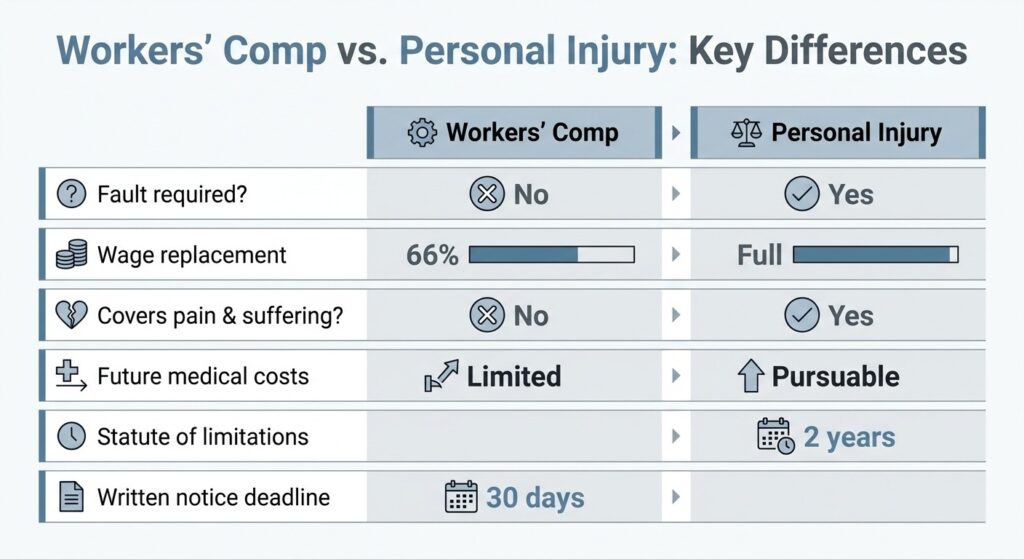
One primary responsibility of these lawyers is helping clients deal with workers’ compensation claims. Navigating the compensation system can be daunting, with strict deadlines and required documentation. An experienced workplace accident attorney can assist with filing claims, appealing denials, and ensuring injured employees receive the benefits they deserve. They know how to interpret the law to safeguard your rights throughout the process.

Identifying When Lawsuits May Be Necessary

While workers’ compensation covers many work injuries, some situations justify filing a personal injury lawsuit. For example, cases involving gross employer negligence or injuries caused by defective products might allow for additional legal recourse. Specialized attorneys can determine if pursuing a lawsuit alongside or instead of a workers’ compensation claim is the best course of action, maximizing potential compensation for the injured worker.

The Importance Of Experience And Advocacy

Selecting the right legal representation makes a significant difference. Attorneys specializing in workplace accidents understand how to investigate incidents, gather compelling evidence, and negotiate effectively. A qualified workplace accident lawyer brings both compassion and assertiveness to your case, fighting to ensure responsible parties are held accountable and victims receive necessary medical care and compensation.

Finding The Right Lawyer For Your Case

When seeking legal help for a workplace injury, research attorneys who have a proven track record in handling similar cases. Look for client testimonials, ask about case outcomes, and ensure they have expertise tailored to your specific industry or injury. Taking these steps can provide peace of mind, knowing your attorney is well-equipped to advocate for your needs and secure a fair resolution.

Final Thoughts On Specialized Legal Representation

Having an attorney who specializes in workplace accident lawsuits can make a world of difference. Their specialized skills, understanding of complex regulations, and commitment to your recovery will support you at every stage so you can focus on healing and moving forward confidently.

How Do You Sue Someone For Wrongful Death?

Understanding The Foundations Of Wrongful Death Claims

Losing a loved one due to someone else’s negligence or misconduct is a devastating experience. In such cases, wrongful death lawsuits allow surviving family members to seek justice and compensation. These claims typically arise from fatal accidents, medical malpractice, or intentional acts, and are governed by state-specific laws. Knowing the basics can help you determine if you qualify to bring a suit on behalf of your loved one.

Who Is Eligible To File A Wrongful Death Lawsuit?

The right to sue for wrongful death varies by state, but typically includes immediate family members such as spouses, children, or parents. In some cases, representatives of the estate may also bring a claim. Only those with a significant relationship to the deceased—and a demonstrable financial or emotional loss—are allowed to pursue legal action. Consulting a qualified attorney ensures you understand your eligibility before moving forward.

Key Steps In The Wrongful Death Lawsuit Process

Beginning a wrongful death lawsuit involves several distinct stages. First, the plaintiff must gather evidence showing the responsible party’s negligence or wrongdoing led to the death. Next, the case is officially filed in civil court through a complaint document. From there, both sides engage in discovery, exchanging information and interviewing witnesses. Most cases resolve via settlement negotiations, though some may proceed to a full trial.

Types Of Damages You Can Claim In Wrongful Death

Compensation in wrongful death lawsuits is designed to alleviate the financial and emotional burden suffered by survivors. Damages can include lost wages and benefits, funeral expenses, medical costs prior to death, and loss of companionship or guidance. In certain cases, punitive damages may also be awarded if the action was especially egregious. Calculating damages accurately requires attention to both present and future losses.

The Importance Of Timely Action And Legal Guidance

Every state enforces statutes of limitations that restrict the time frame for filing a wrongful death claim—sometimes as little as one or two years after the incident. Acting promptly is essential to avoid losing your legal rights. Experienced attorneys help families through this challenging process, ensuring all documents are prepared and deadlines are met. Their guidance can be invaluable during an emotionally charged time.

Navigating The Complexities Of Proving Fault

Establishing liability in wrongful death actions often demands thorough investigation and expert testimony. Plaintiffs must demonstrate that the responsible party’s actions directly caused the death. This can involve medical records, traffic accident reports, or other forms of evidence. A lawyer’s expertise in building a strong case is crucial to increasing the odds of a favorable outcome for grieving families.

Achieving Justice And Closure Through The Legal System

Although no amount of compensation can replace a loved one, wrongful death lawsuits offer families a measure of justice and financial relief. By following the right steps and working with knowledgeable counsel, survivors can hold responsible parties accountable, providing closure and support for the healing process.